Publised on Oct 30, 2026

Melvyn Goodinson

Ask most people what a graphic designer does and you will hear something like this: they take something rough and make it look better. A logo gets tidied up. A leaflet gets a smarter layout. A website gets a fresh coat of paint. It is a perfectly reasonable assumption, and it is also the reason so many creative projects leave business owners feeling vaguely disappointed.
If you are asking what a graphic designer actually does, the honest answer is that the thing you can see is only part of it. The finished design is the visible result. The decisions behind it are what give it purpose. When a business hires a designer purely to make something look nice, it is paying for the least valuable part of the job and missing the most valuable part entirely.
This article explains the difference, why it matters for your business, and how to brief a designer in a way that gets you far better results. If you would rather talk it through with a real person, you are always welcome to get in touch with me, Melvyn, at Gigaflux. I would much rather start a project with a good conversation than a vague instruction.
The visible part is the smallest part
I sometimes describe the finished artwork as the last 10% of a project. To be clear, that is a rhetorical illustration rather than a measured industry statistic. But it captures something true. By the time a designer opens the software and starts arranging type, colour and imagery, a great deal of thinking should already have happened.

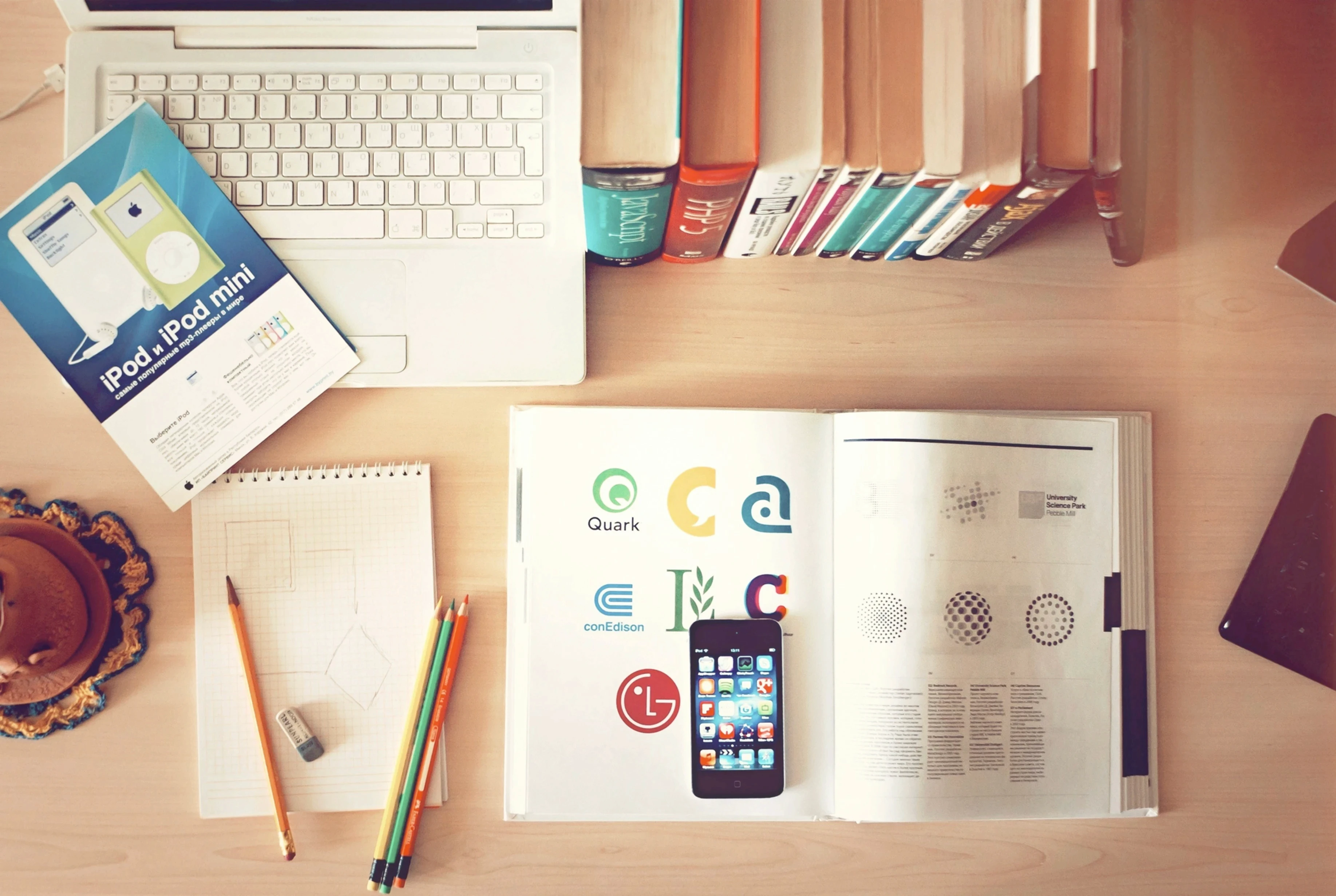
Credit: “Logo designer using pen and paper” by Claireneon, via Wikimedia Commons, licensed under CC BY-SA 4.0.
Before any artwork exists, a designer is weighing up questions that have nothing to do with decoration. Which of several possible ideas best answers the brief? What is the one message that has to come first? What information can be removed so that the important thing is not buried? What should the customer understand, feel or do within a few seconds of seeing this?
Those are not aesthetic questions. They are decisions about communication, priorities and human behaviour. A good designer makes dozens of them on every project, and most of them are invisible in the finished piece. That is rather the point. When the thinking is done well, the result simply feels clear, confident and easy to respond to. Nobody looks at a well-judged poster and says, “What a lovely series of editorial decisions.” They just know where to look and what to do next.
This is also why two designs that look equally polished can perform very differently. One has been built on a clear decision. The other is simply well finished.
A beautiful design cannot rescue a bad decision
This is the idea I feel most strongly about, so I will say it plainly. Nice on top of a bad decision is just a well-dressed mistake.

Consider what that looks like in practice. A campaign can be beautifully produced and still communicate the wrong message to the wrong people. A website can look impressive and still leave visitors unsure what the business offers or what they are supposed to do next. A product’s branding can be attractive, even award-worthy, and still fail to give customers a convincing reason to choose it over the cheaper alternative sitting beside it on the shelf.
In each case, the design may well have done its job. The problem sits upstream, in a decision that nobody properly examined. Perhaps the business assumed customers cared about a feature they barely notice. Perhaps it tried to say five things at once because nobody wanted to leave anything out. Perhaps it copied what a competitor was doing without asking whether that approach suited its own situation.
No amount of skilful typography or lovely photography can repair that. Polish simply makes the mistake look more convincing. I have seen businesses spend good money making the wrong thing look wonderful, and it is a frustrating position to be in, because the work seems to have succeeded right up until it fails to deliver anything.
The encouraging side of this is that good design thinking tends to catch these problems early. When a designer asks awkward questions at the start of a project, they are not being difficult. They are protecting your investment.
What good design thinking actually involves
So what does that thinking look like? I find it helps to break it into four areas, and you can apply them to almost any creative project, whether it is a logo, a brochure, a social media campaign or a full brand identity.

The first is purpose. What are we actually trying to achieve? Not “we need a new flyer”, but what should that flyer cause to happen? More enquiries, more bookings, greater recognition at an event, a clearer understanding of a new service? The purpose shapes everything that follows, and a design without one is just an arrangement of pleasant elements.
The second is audience. Who needs to understand or respond to this? A brand aimed at busy facilities managers should not speak in the same way as one aimed at first-time home buyers. The more precisely you can describe the person you are trying to reach, the more confidently a designer can make choices about tone, imagery, hierarchy and language.
The third is message. What matters most, and what can be left out? This is where many projects quietly go wrong. Businesses know their own offer so well that everything feels essential. A designer, coming at it fresh, can help you see what a stranger will actually take in during the few seconds they give you. Often the strongest design is the one that has the courage to say less.
The fourth is action. What should happen as a result? Whether it is a phone call, a click, a purchase or simply a memory that lingers until the customer needs you, the design should point towards it. If nobody can say what the action is, the design has no direction to point in.
Notice that none of these four areas are separate from the visual work. They shape it. The choice of typeface, the weight of a headline, the amount of white space, the placement of a button: each of these is a response to purpose, audience, message and action. That is what separates considered design from decoration.
How to brief a designer to get better results
Understanding all this is useful, but the most practical thing you can do is change how you brief a designer. Many businesses begin with instructions like “make it look more professional”, “make it pop” or “give it a refresh”. I understand why. Those phrases feel like the natural way to describe what you want. The trouble is that they describe a feeling rather than a problem, and a designer cannot solve a feeling with any confidence.

A far more useful brief begins with the business problem. Tell your designer what is not working, or what you are trying to achieve, in plain language.
“Our enquiries have dropped since a competitor rebranded” is infinitely more helpful than “we think the logo looks dated”.
From there, describe the audience you need to reach, and be as specific as you can. Say what that audience currently thinks or does, and what needs to change. If customers currently see you as the cheap option and you want to be seen as the dependable one, that is a brief a designer can really work with.
Finally, explain how you will recognise success. It does not have to be a precise target, though one helps. It might be more calls from the right kind of customer, a smoother conversation with sales, or simply a brand your team feels proud to put in front of people.
A brief like this does something valuable. It gives the designer a meaningful problem to solve, while still leaving room for professional judgement and creative exploration. You are not dictating the solution, and you are not leaving them to guess. You are setting up a collaboration in which the designer can bring their experience to bear, and in which you can both judge the finished work against something more solid than personal taste.
It also makes feedback easier. Instead of “I’m not sure about the blue”, you can ask whether the blue supports the message you set out to deliver. That keeps the conversation productive and protects the project from drifting into a debate about preferences.
Common questions about hiring a graphic designer
What does a graphic designer actually do?
A graphic designer translates a business’s goals into visual communication that an audience can understand and act on. That includes the artwork itself, but also the decisions about message, hierarchy, tone and structure that sit behind it. The visible result is the end of the process, not the whole of it.
Why is design more than just making things look good?
Because appearance shapes perception, and perception shapes behaviour. People decide very quickly whether a business seems credible, relevant and worth their attention. Design that has been thought through helps them reach the right conclusion. Design that is merely attractive may please the eye without moving anyone to act.
How do you write a good design brief?
Start with the problem you are trying to solve rather than the item you want produced. Describe your audience, what they currently think or do, what you would like to change, and how you will know it has worked. Keep it honest and specific, and be open to the designer questioning your assumptions.
What should you tell a designer before starting a project?
Share the purpose of the project, the audience, your practical constraints such as budget and timescale, and anything that has or has not worked before. The more context you offer, the less time is spent guessing and the more time goes into solving the real problem.
The best creative work starts with a decision
That is how I approach every project at Gigaflux. I would rather spend the first conversation understanding what you are trying to achieve than rush towards the pretty part, because the pretty part is far easier once the right decision has been made. Whether you need a new brand identity, a campaign, or simply a more honest look at why your current materials are not working, I would love to hear about it.
If you have a project in mind, get in touch with me at gigaflux.co.uk and tell me about the problem you are trying to solve, not just the thing you think you need. Engaging a designer early, and supporting an independent creative who genuinely cares about the outcome, is one of the best investments a growing business can make. I look forward to hearing from you.